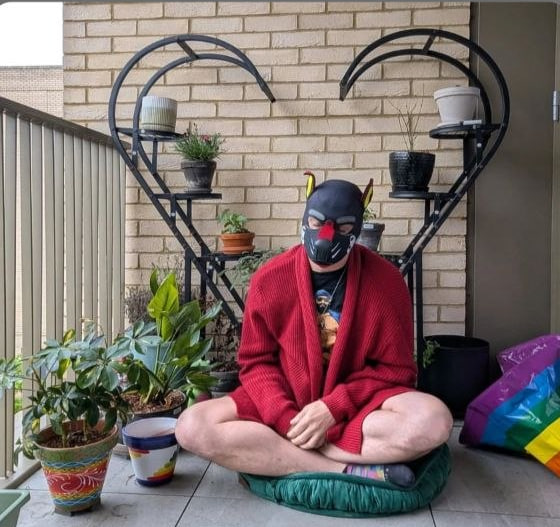
A note before we start: this week’s piece touches on some patterns that might feel close to home. That’s intentional. If something lands hard, be gentle with yourself. Put it down, make a brew, come back to it. You don’t have to process everything in one sitting, and if something stirs something up, reach out to someone you trust.
We need to talk about the language. Because most conversations about mental health in this community, and honestly most conversations about mental health anywhere, are already in trouble before they’ve properly started. The words we use are getting tangled up with each other, used interchangeably when they mean different things, and that confusion has real consequences for how people see themselves and whether they feel able to ask for help.
Mental health. Mental wellness. Mental health conditions.
Most people use these as if they mean roughly the same thing. They don’t. And until we’re clear on what we’re actually talking about, we’re essentially trying to navigate without a map.
So let’s fix that.
Mental health isn’t good or bad. It just is.
Mental health is your baseline. It’s the ongoing state of how your mind functions, how you think, process, regulate your emotions, respond to stress, and relate to yourself and other people. It exists whether you pay attention to it or not.
The most common assumption people make is that mental health only matters when something is wrong. That’s flawed. You always have mental health, the same way you always have physical health. Ignoring it doesn’t mean it’s stable. It just means you’re not looking.
In the pup space this shows up in quieter ways than people expect. How safe you feel dropping into headspace. How you attach to handlers, packmates, chosen family. How you handle rejection from a dynamic, from an event, from someone you trusted. How you come back to yourself when things wobble.
That’s your mental health, operating in the background, all the time.
Mental wellness is what you actively do with it.
This is where the real work lives. Mental wellness is the ongoing practice of maintaining and improving your mental health, and I want to challenge something here, because wellness has developed an image problem.
People treat it like aesthetics. Clean routines. Mindfulness quotes. Green juice. Surface level stuff that looks like wellness without necessarily being it.
Every year at Doggy Weekend I open my Pawsitivity and Play talk by asking the room who’s tried meditation. Most hands go up. Then I ask who tried it and felt like they failed, couldn’t switch their brain off, couldn’t sit still, couldn’t find the calm they were supposed to find. Almost every hand stays up. There’s usually some rueful laughter. Then I ask who has put their pup hood on and just… settled. Felt the noise outside quiet down. Felt present in a way that’s hard to access the rest of the time.
The hands go up again.
That’s meditation. You’ve been doing it for years. You just didn’t have the language for it.
And that matters, because a significant amount of what we do in pup play is legitimate wellness work, even when we’re not framing it that way. The hood. The headspace. The pack. The handler relationship built on trust and clear communication. The mosh that gets you out of your head and into your body. These aren’t separate from mental wellness. For many of us they’re central to it.
But here’s where I want to be honest with you, because this is something the community has taught me as much as I’ve learned it anywhere else.
There are two kinds of wellness work and they don’t feel the same at all.
There’s the instinctive kind. The hood going on and the world quieting down. The pack mosh that gets you out of your head without trying. The handler relationship that regulates you just by existing. That stuff can feel effortless, even joyful. It’s real and it counts.
And then there’s the other kind. The grinding, deliberate, costs-you-something kind. The getting up and going to therapy anyway. The having the conversation you’ve been avoiding for three weeks. The noticing you’re using headspace to escape rather than to restore, and choosing to sit with that instead. The setting a boundary that risks a connection you’re not sure you can afford to lose.
That kind doesn’t feel like wellness while you’re doing it. It feels like effort. Sometimes it feels like failure, because it’s hard in a way the instinctive stuff isn’t.
Both are real. Both count. And for a lot of people, particularly those of us whose nervous systems don’t make the deliberate part easy, treating wellness like it should feel natural is one of the more quietly harmful myths in circulation. Every time someone in this community has shared that with me, I’ve recognised something true in it. We learn from each other constantly. That’s not a small thing.
Pawsitivity, when it’s done properly, isn’t blind optimism. It’s intentional regulation. It’s choosing how you show up, not pretending everything is fine. And sometimes choosing how you show up is the hardest thing you’ll do that day.
Mental health conditions are something more specific.
A mental health condition is when patterns in your mental health become disruptive, persistent, and start impairing your ability to function or live the life you want. Things like depression, anxiety, or trauma-related disorders. These are real, they’re common, and they’re nothing to be ashamed of. They often need professional support, and that support is worth seeking. But they are not the whole of mental health, and they’re not what we mean when we talk about wellness.
The simplest way I can put it:
Mental health is the state you’re in. Mental wellness is what you do with it. A mental health condition is when that state starts working against you in ways that need more than self-awareness to address.
All three can be true at the same time. Someone can be living with a diagnosed condition and still be actively building wellness. Someone with no diagnosis at all can be quietly struggling and ignoring it because they don’t think they qualify for support.
That gap, between “I’m not struggling enough to bother” and “I’m not actually okay,” is where a lot of people in this community are sitting without realising it. Naming it matters more than most people know.
Here’s where I need you to sit with something uncomfortable.
The pup community is genuinely one of the most supportive environments many of us have encountered. I mean that. But support and enabling can look very similar from the inside, and the same qualities that make pup spaces powerful can also blur some important lines.
Headspace can be genuine relief and it can be avoidance. Sometimes it’s both at once. A dynamic can look like care and still be reinforcing patterns that aren’t healthy. Community can hold you and community can enable you to stay stuck.
I’m not saying this to alarm anyone or to cast doubt on the connections and dynamics you value. I’m saying it because part of mental wellness is being honest about function. Not “does this feel good” but “is this helping me grow, or is it quietly reducing my capacity?”
That’s a harder question. It’s worth asking.
If something in this piece landed close to home, that awareness is worth something.
Even if it’s uncomfortable right now. Awareness is the beginning of wellness, not the end of it. You don’t have to have it figured out. You just have to not be alone with it.
Talk to one person you genuinely trust. Someone outside the immediate dynamic if possible. And know that the series will keep building frameworks for exactly these kinds of questions. You’re not being left with just a question mark.Next week I’ll be looking at identity, masks, and the psychology of pup headspace, and why the freedom to be your pup self might be doing more for you than you think.
 FLASH MUTT
Leave a comment